
Hello, World!
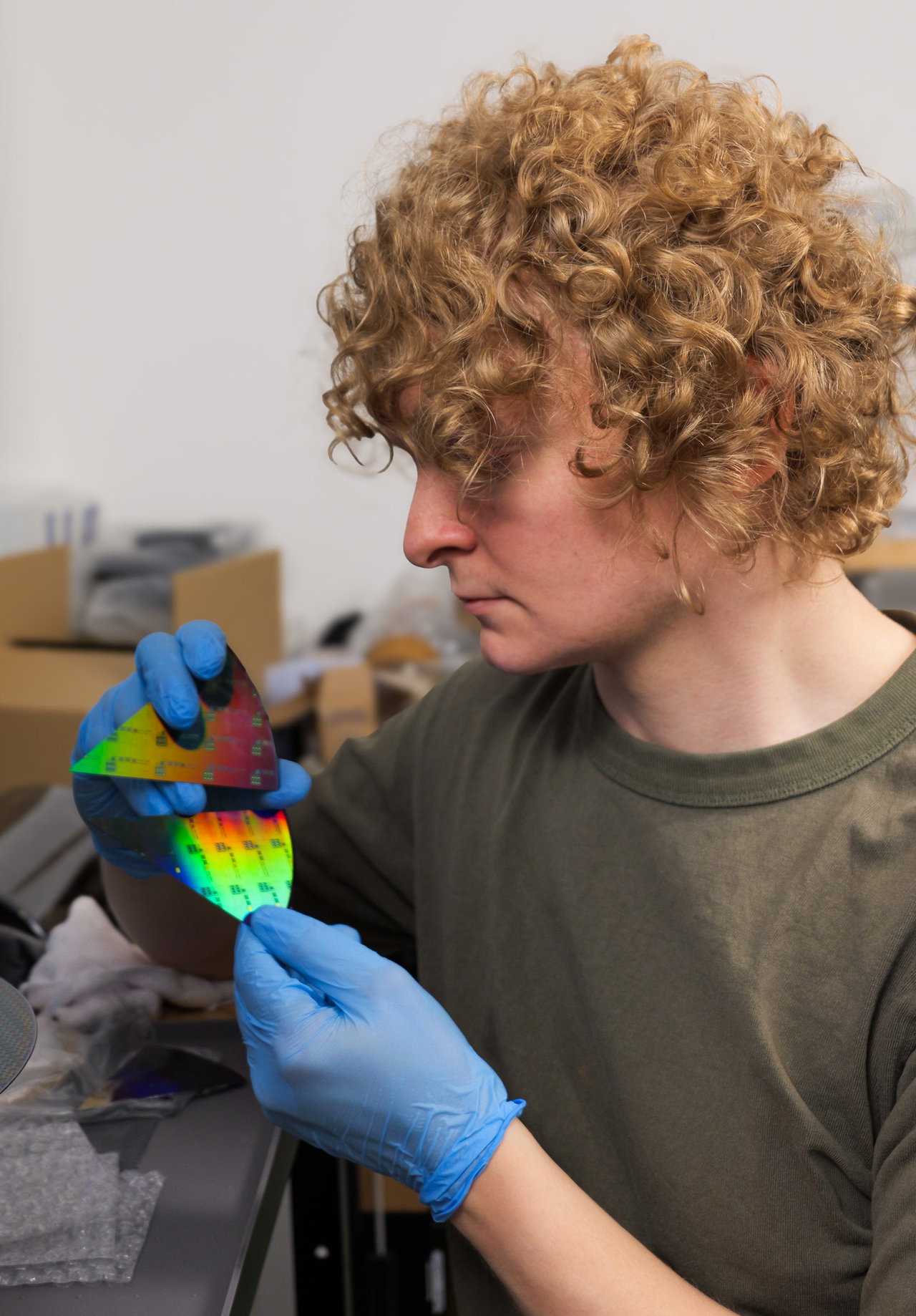
I'm Jhonti, the Maker at Wafer & Wire. For the past eight years I've built physical pentesting gear and covered cybersecurity news on YouTube as Seytonic.
Then a silicon wafer arrived in the mail.
I was immediately struck by the visuals, the complex colour shifting and iridescence looks like something out of science fiction! Equally surprising was how little known and appreciated this material is outside of engineering circles.
With Wafer & Wire I want to represent technology and security concepts using the foundational material they're built on. All whilst respecting the form and provenance of humanity's greatest engineering achievement.
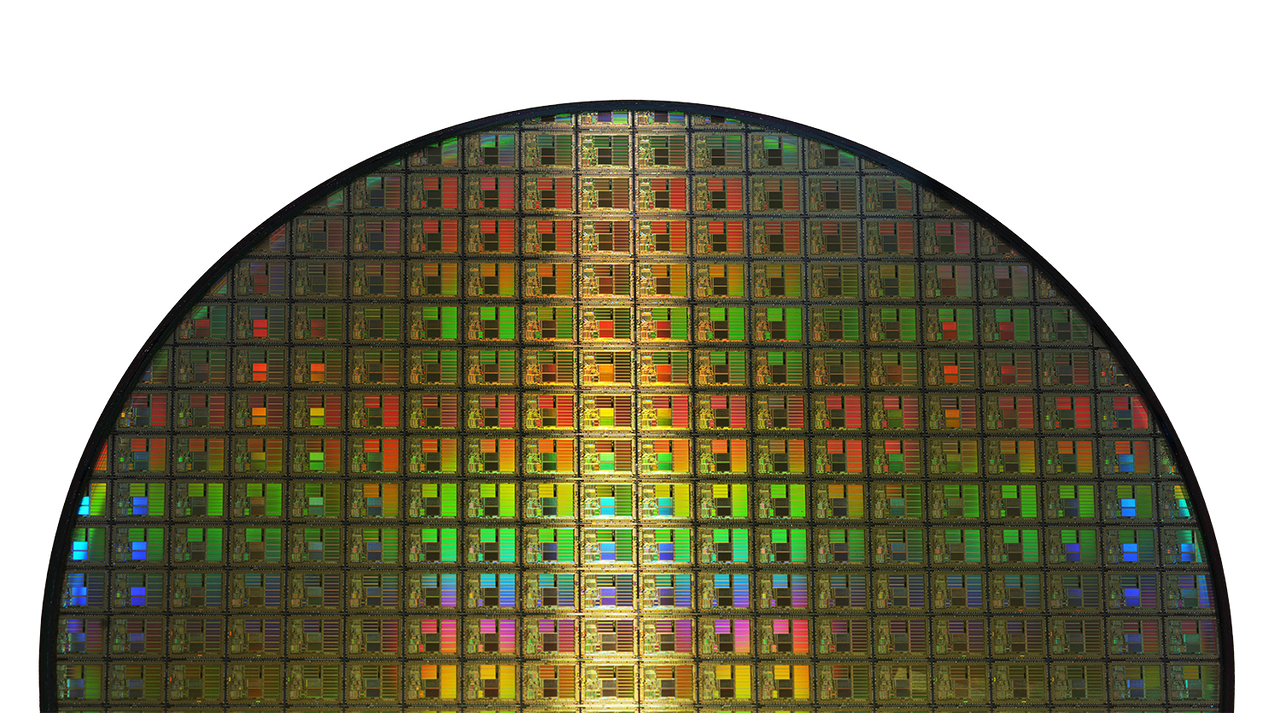
ROCKwell cpu c5902, fabricated circa 1990
Where every microchip begins
Every microchip begins its life on a disc of silicon, sliced thinner than a penny. Hundreds (sometimes thousands) of chips are fabricated on a single wafer before being sliced into their individual dies. Each die disappears into your electronics, sealed in plastic never to be seen again.
Some wafers don’t get so far. Microscopic imperfections result in them being rejected, often they’re destroyed, but not always. I save these wafers.
Iridescence
The colour is a result of the microscopic circuitry and thin surface layers on the wafer, structured at a scale similar to the wavelength of visible light. Light hitting the wafer doesn’t just reflect, it interferes and diffracts, creating shifting colours.
Photographs never quite capture the brilliant iridescence, it can only be fully appreciated in person.
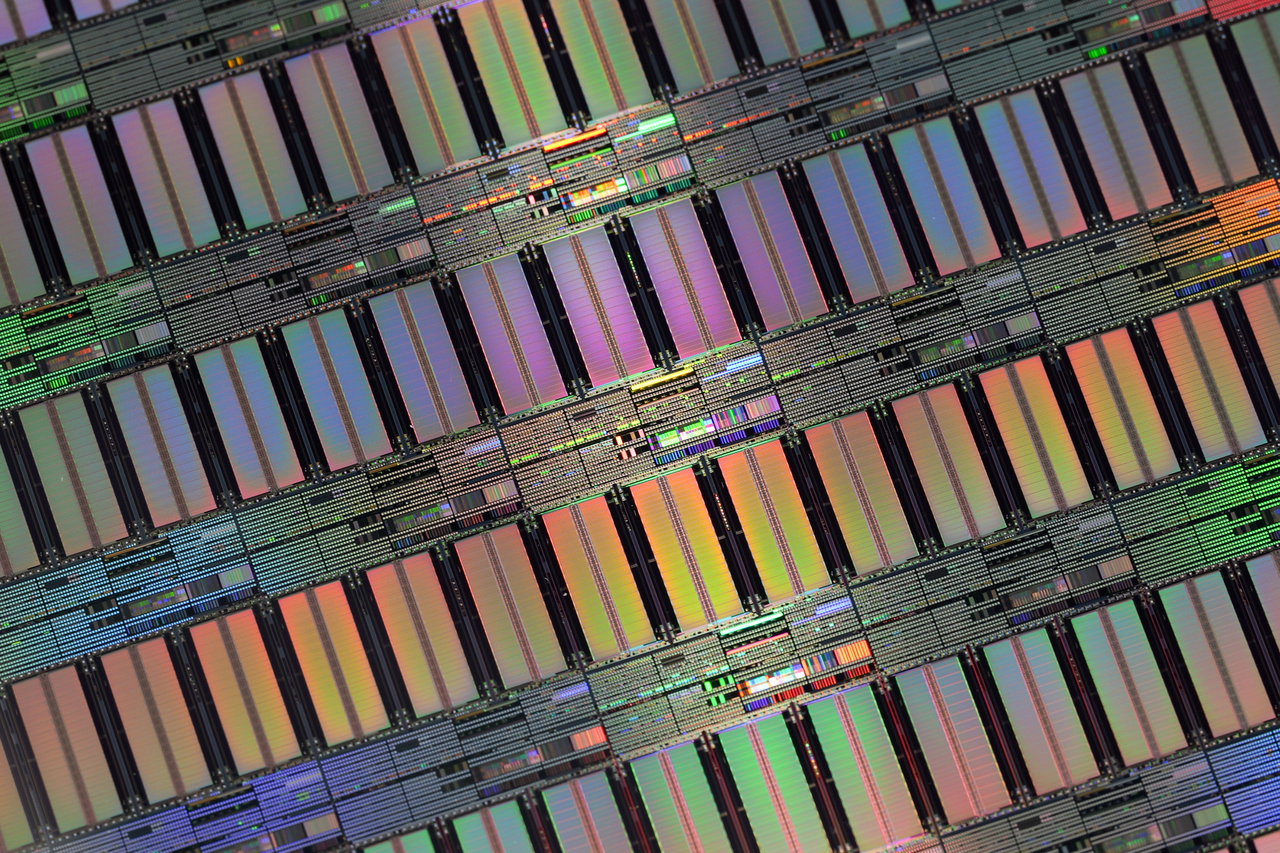
Vintage hp memory, fabricated circa 1992

In the age of AI slop, I wanted to create something with weight.
Something that behaves differently depending on where you’re standing and time of day.
Something you simply can’t screenshot.
— jhonti, maker @ Wafer & Wire
the process
From wafer to wall.
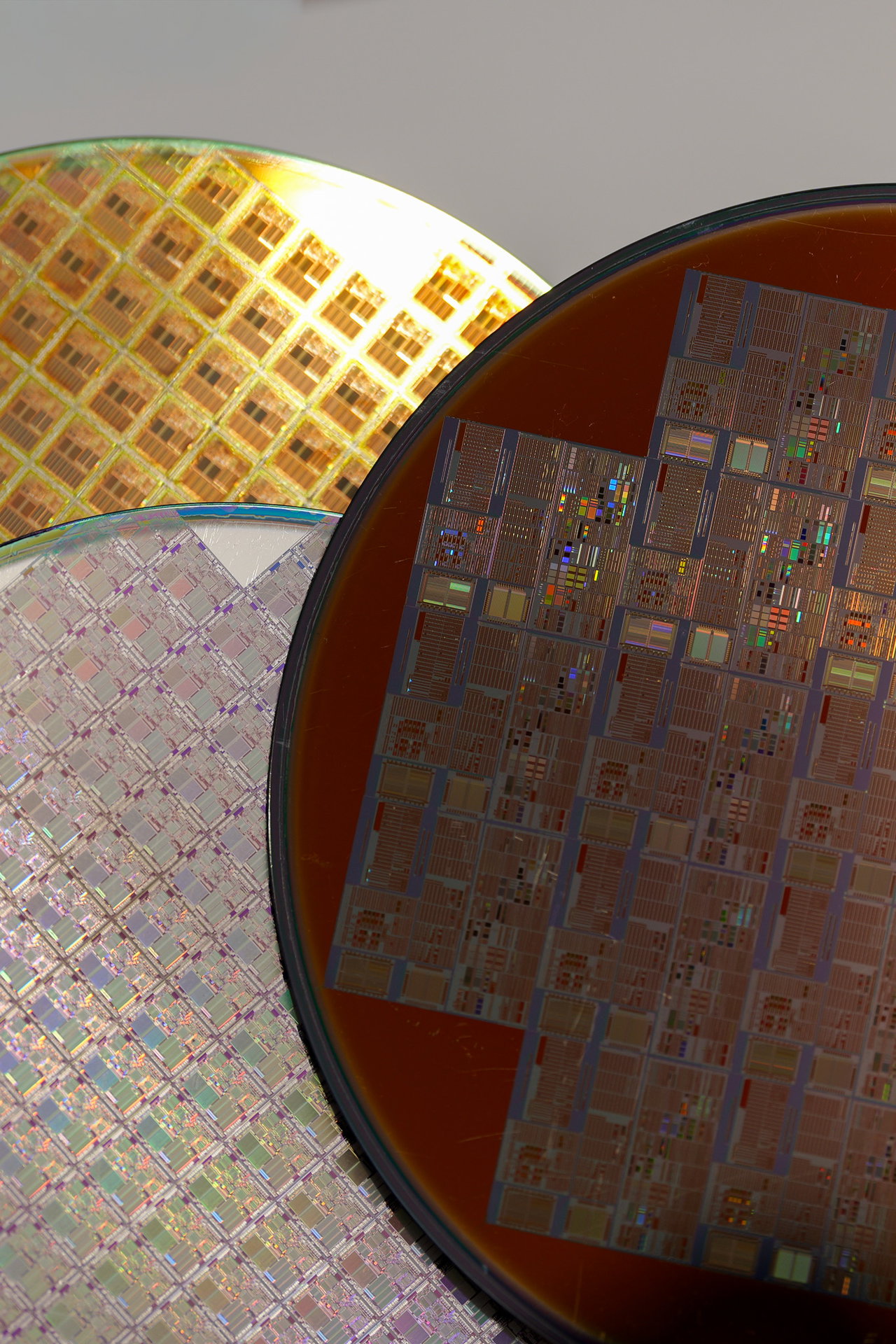
01 — SOURCING
I source wafers based on their visual excellence and historical significance. If I'm making a piece comprised of multiple wafers I take great care to ensure the colours and visuals compliment each other.
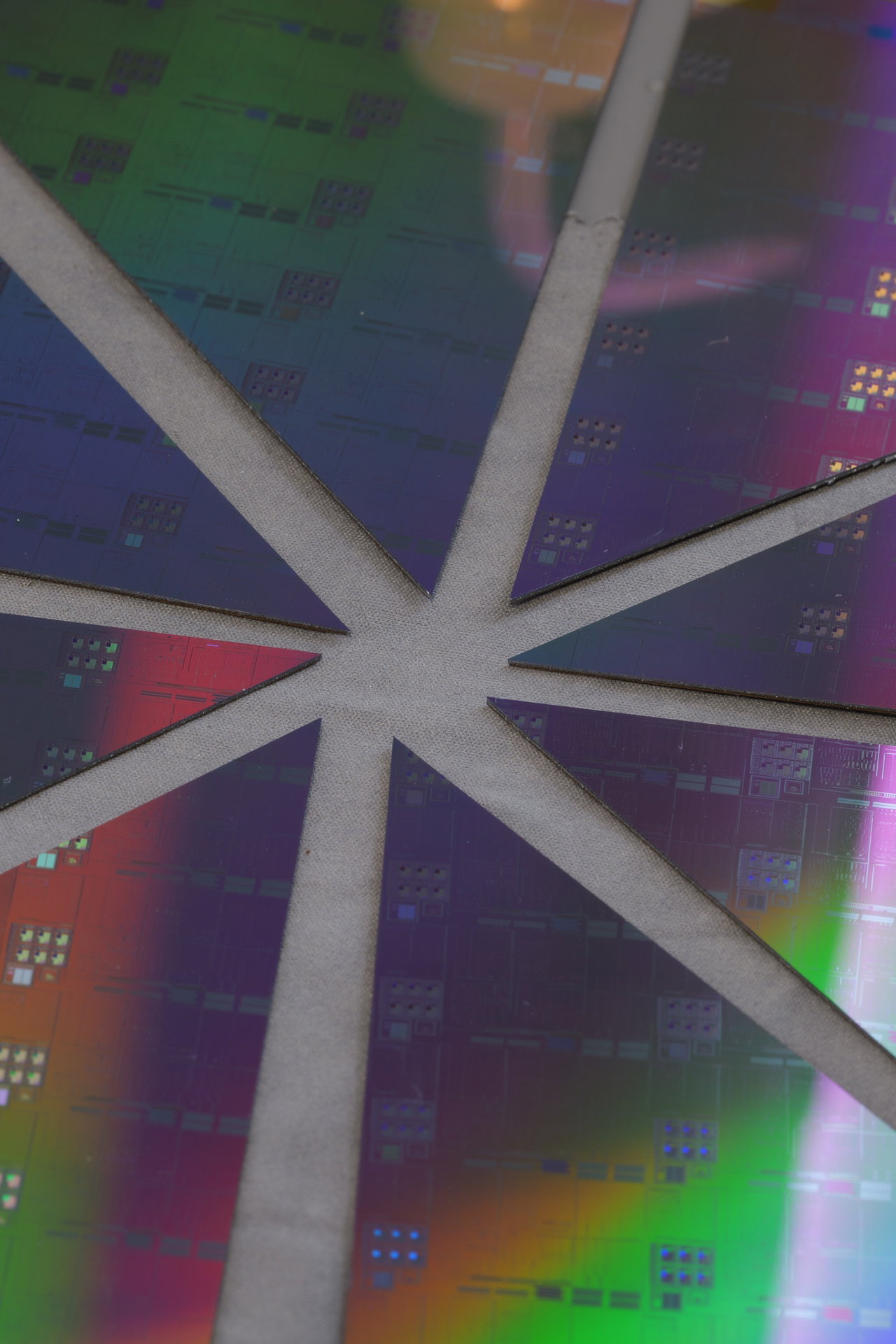
02 — CUTTING
Each wafer is scored and hand-cleaved into fragments. It's a delicate process given each wafer is 0.75mm thin.
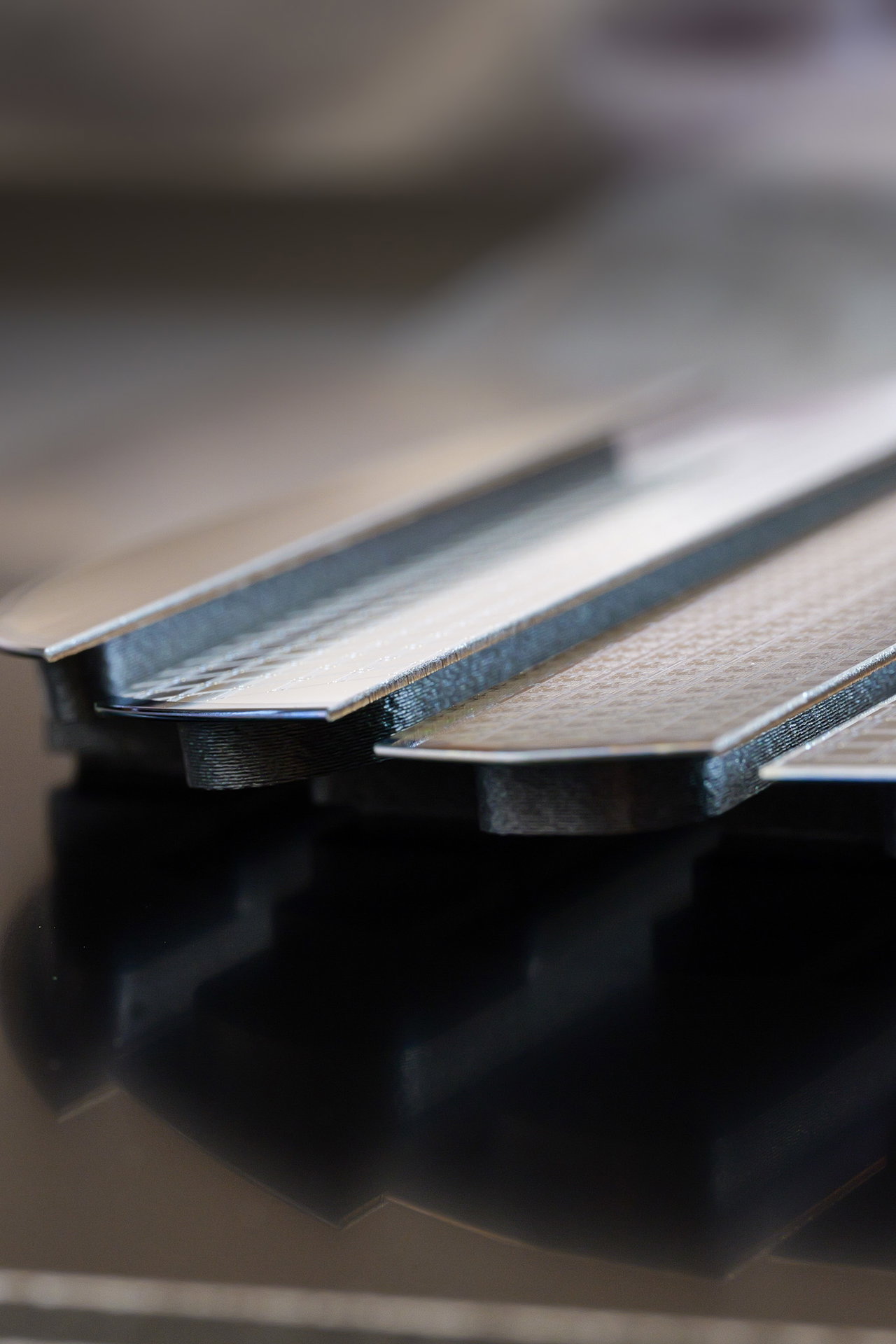
03 — MOUNTING
Fragments are carefully angled to expose the iridescence. They're set against a matte aluminium backer and sealed behind anti-reflective glass, protecting the surface and visuals
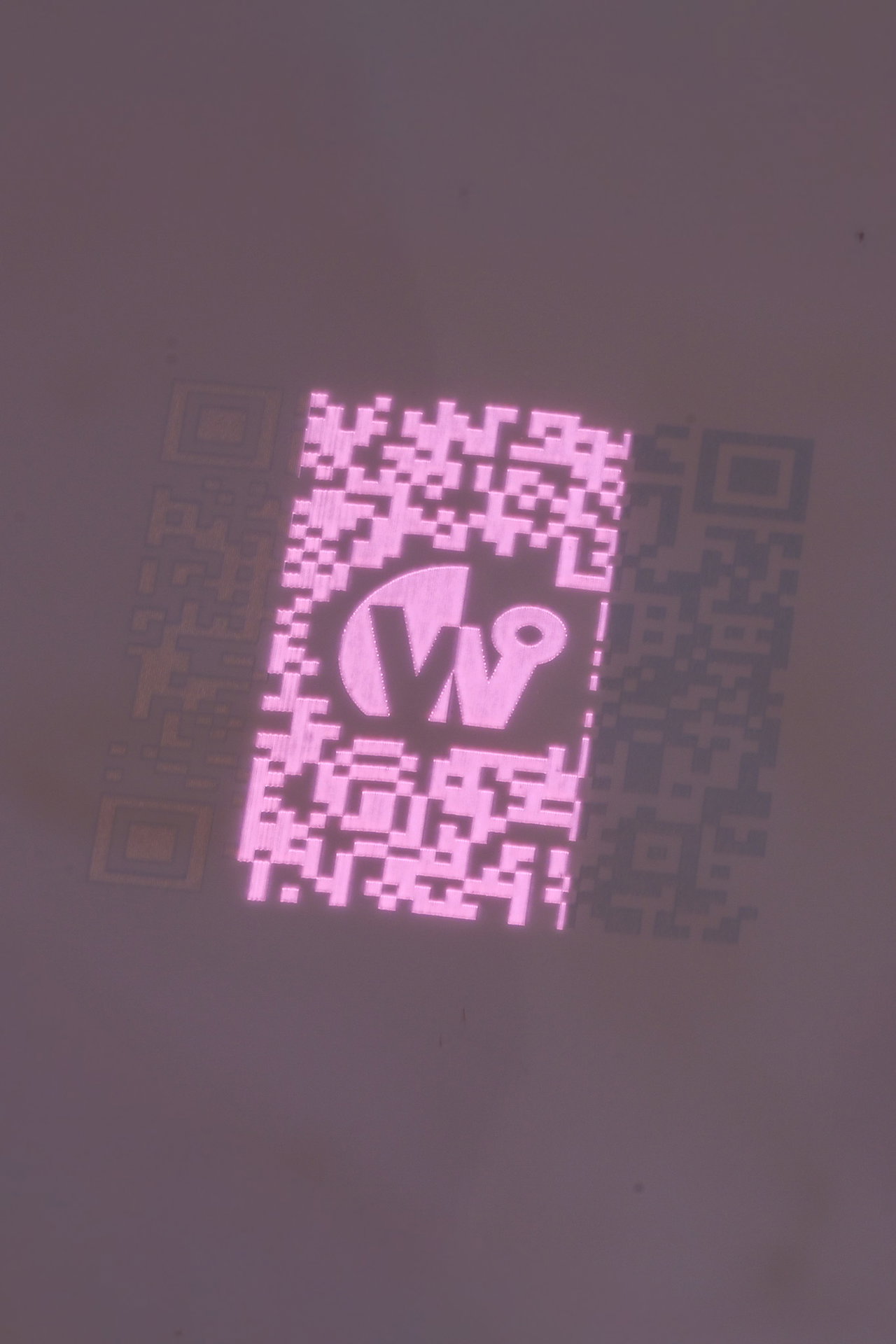
04 — signing
Each piece is logged, numbered, and issued a cryptographically signed certificate of authenticity. This is laser etched onto the aluminium rear.